selected work
Sunny Patch, 2026 (Installation view). Cyanotype animation, sound, vinyl
Sunny Patch, 2026. Cyanotype animation, sound [Excerpt]
Sidekick, 2026 (Installation view). two-Channel game for PC, sound, screens, gamepads. Dimensions variable
Sidekick, 2026. [Excerpt]
Iyad’s Sword, study. Digital photograph; 3D-printed PLA, fabric
Rift Zone No. 5, 2025. 161 x 50 x 16 cm. MDF and resin
Rift Zone No. 5 (detail), 2025. 161 x 50 x 16 cm. MDF and resin
The Pond of Person A, 2025. Virtual exhibition view, Header/Footer Gallery, New Media Caucus
KISMET, 2024. Still from an interactive platform for web
Orient, 2023. 379 × 287 cm. Birch and poplar
Orient (Detail), 2023. 379 × 287 cm. Birch and poplar
Orient, 2023. Floor plan
sunny patch
In Islamic tradition, the Prophet Muhammad and Abu Bakr fled Mecca for Medina and hid from their pursuers inside the Ghar Thawr cave. A spider spun a web across the entrance, tricking the trackers into believing the cave was empty.
Sunny Patch utilizes a cyanotype-based animation technique to depict an arid landscape inhabited by a human figure and a spider, where natural processes take on unfamiliar forms. Drawing from the narrative of Ghar Thawr, the work explores concealment as a generative act.
Sound design by Simzii
Sidekick
Sidekick is a story-driven video game for two. The gameplay unfolds through a digital poem that follows two characters: Laith, a captain of the national Palestinian football team, and his friend Iyad, who is invested in an RPG they play together in his apartment. In the tense, high-stakes days leading up to the biggest match of Laith’s career, a series of events forces them to confront their complex relationship.
The project explores dependency and the poetics of mediated communication through digital space. Two players inhabit the same game from different perspectives, with each participant seeing and controlling only part of what is happening. Progress depends on their ability to communicate and trust one another through these asymmetries.
Sidekick looks at how interactive systems can structure relationships; how rules and unequal forms of agency produce cooperation and vulnerability between participants.
Rift Zone No. 5
Rift Zone No. 5 asks how sacred architecture anchors and holds the body. The sculpture draws from architectural forms found in sacred sites in Palestine and transforms these references into a palanquin- or stretcher-like structure. An object designed to carry both the sacred and the wounded.
The Pond of Person A
“The Pond of Person A (2025) is a project that explores how we might reclaim or inhabit our subjecthood within an undefined entity that closely resembles ourselves. It asks: how do we take initiative and form a relationship when confronted with a presence that mirrors us throughout the process of subjective experience? The web space—often referred to as the "Sea of Data"—has become a contemporary site of self-reflection for users. As we know, the accuracy of this reflection has grown increasingly precise through algorithmic intervention.
The Pond of Person A constructs a web-based self-cognition through the artworks KISMET (2024) by Muhammad Toukhy. By navigating a virtual island and discovering a hidden pond, the audience moves as though surfing through a digital landscape. Upon finding and clicking on a "Mic-Bomb" within the pond, the artwork KISMET is activated, initiating a reflection of the audience’s action through both visual and auditory means. The Pond of Person A originates from the 2014 project The Lake of Person A by Bowie Bo Gyung Kim. That project explored multiple emotions evoked by a single object—an unknown lake in Warsaw, Poland. Inspired by the surface of that lake, The Pond of Person A reflects the varied emotional and perceptual responses triggered by another surface: the computer screen, or the “surface” of the web”.
Curated and co-created with Bowie Bo Gyung Kim.
Special Thanks to Rene G. Cepeda
and Constanza Salazar
Orient
The title, “Orient” refers both to the historical colonial gaze directed toward the East and to the act of orienting oneself within space.
The work consists of approximately one thousand hand-laid and painted wooden pieces installed directly on the floor of a gallery in Jaffa. It re-situates a floor pattern common in Palestinian homes prior to the Nakba into a contemporary public site.
A compass geometry is embedded within the pattern. It bends and redirects itself toward the center of the installation.
Epiphany
Epiphany is a Christian holiday celebrated in Palestine through a tradition known as “The Blessing of the Waters,” in which men and boys participate in a competition where a priest throws a cross into the waters of Jaffa Harbor.
The work investigates the complex relationship between the Palestinian residents of Jaffa and the sea, a place that holds both nostalgia and a constant reminder of exile and trauma.
Studies of Pierced Flags
In this series, pieces of digital clothes were created using computer graphics and subjected to wind simulations. Deliberate tears allow computed air to pass through the surface, and the resulting images were exposed onto canvas using diluted cyanotype.
Works from the series “Studies of Pierced Flags” were exhibited in 2023 as part of “The Forbidden”, a solo exhibition at Wannsee Contemporary, curated by Dr. Avi Feldman.
II
In July 2019, a dove entered the Jabaliya Mosque in Jaffa and refused to leave. She nested on an air-conditioning unit and raised her chicks inside, dividing worshippers between those who saw a sign of grace and those troubled by the mess. The work presents a short video loop manipulated from the mosque’s CCTV footage.
I
In an eastern part of Jaffa, there are three neighboring landmarks: an old cell site antenna, which I believed to be a divine entity when I was a child, the remnants of my grandparents’ home, demolished to make way for an upscale tower for residents, and the ground where a historical football stadium once stood.
In a video essay that is a component of the video installation “I,” I explore the historical and imaginative connections among these three landmarks.
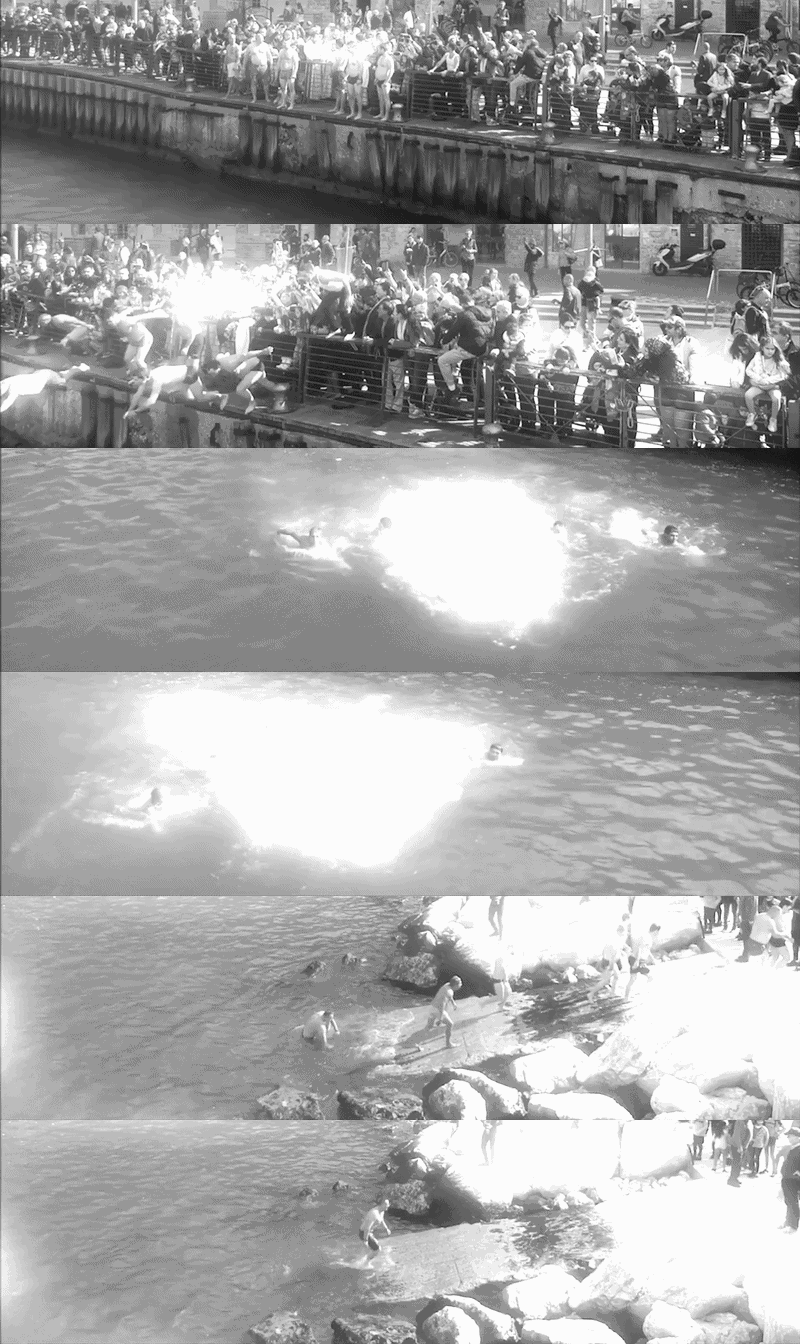
Epiphany, 2023. 7:56 min, Stills from video
Epiphany, 2023. 7:56 min, video; no sound. [Excerpt]
“Muhammad Toukhy: The Forbidden,” 2023. Exhibition view at Wannsee Contemporary, Berlin. Photo: Boaz Arad
Studies of Pierced Flags No. 3, 2023. Cyanotype on Canvas. 29.7 × 42 cm
Studies of Pierced Flags No. 6, 2023. Cyanotype on Canvas. 29.7 × 42 cm
II, 2022. Stills from video
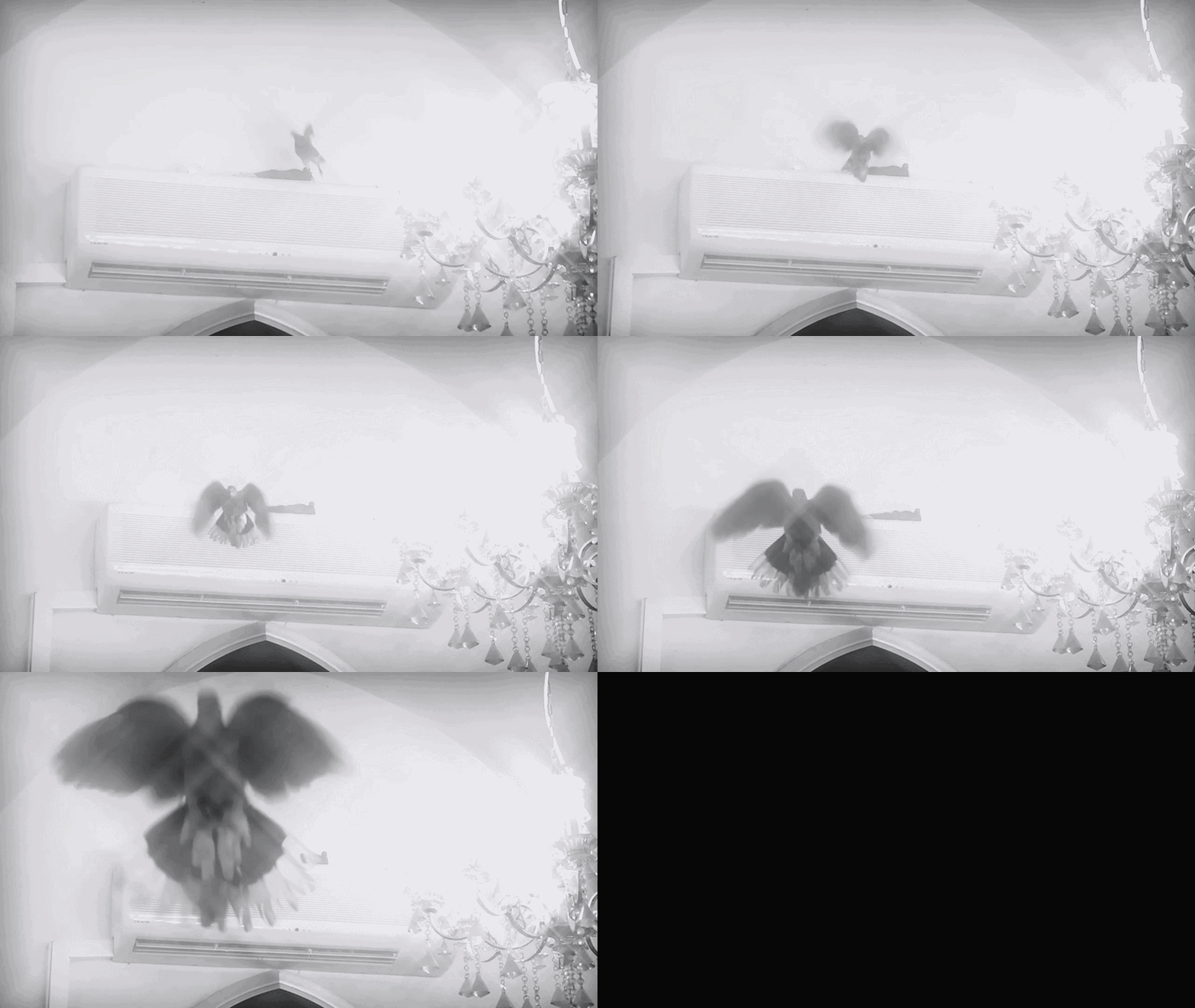
II, 2022. Video [Excerpt]
“I”, 2021. Installation view
At Stake, 2021. Projection (loop) on cardboard surface, 120 × 41 cm
Untitled (Lee Bowyer & Kieron Dyer), 2021. 238 × 176 cm. Vinyl Emulsion on canvas
I, 2021. Stills from video